Civics, Explained
The Florida Civic Literacy Exam asks about a short list of people, and most study guides reduce each one to a name and a phrase. These are not that. Every episode is one figure making his own argument, in his own words, and then telling you the exact distinction the exam is going to test you on.
Season 1 is Who's On The Test: 13 episodes, three to four minutes each, free, with nothing to sign up for.
Who's On The Test
All 13 episodes are written and in production. The first lands shortly.
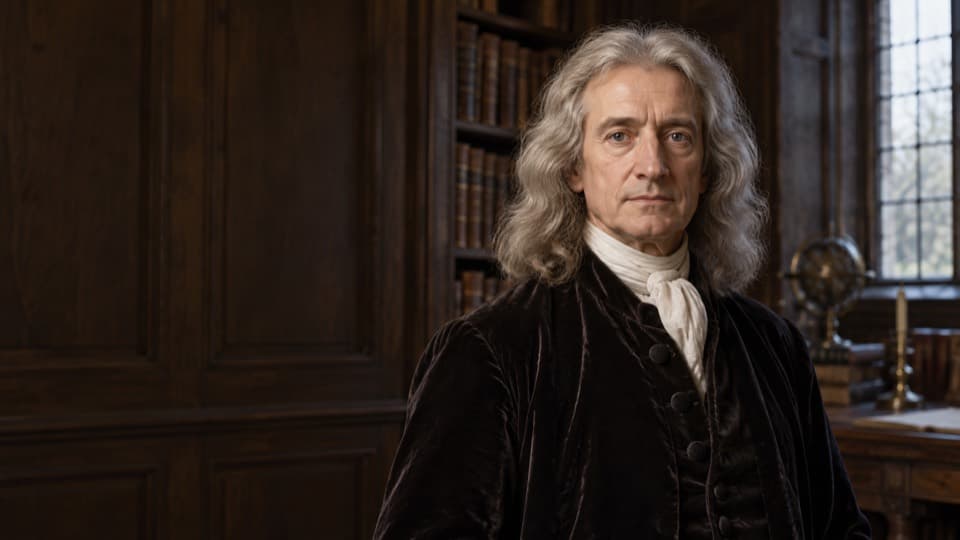 Coming soonEpisode 1 · Coming soon
John Locke
Natural rights, the social contract, and government by consent. One Englishman sits underneath all three, and he never set foot in America.
On the examLocke wrote the argument; Jefferson wrote the sentence. Consent of the governed is Locke’s idea in Jefferson’s words, and the exam asks you to tell the two apart.
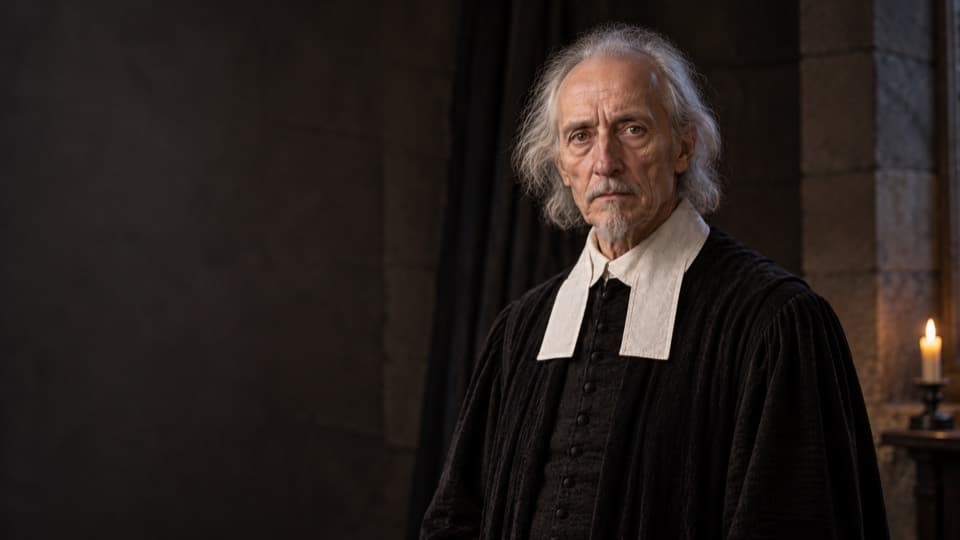 Coming soonEpisode 2 · Coming soon
Thomas Hobbes
The other social contract. Hobbes and Locke start from the same question and end up somewhere almost opposite, which is exactly why the exam pairs them.
On the examBoth men argue from a state of nature and a social contract. Hobbes surrenders rights to a sovereign to escape it; Locke keeps them and holds government to account.
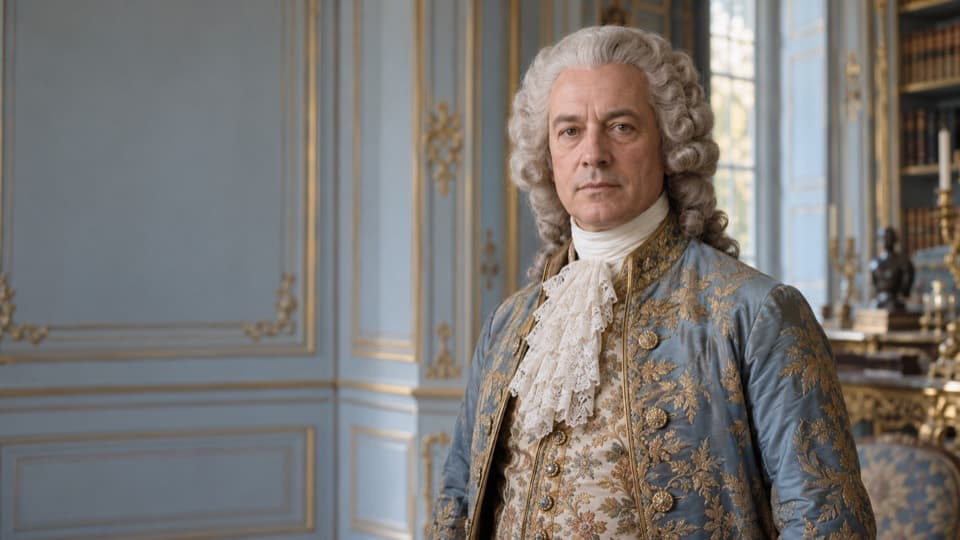 Coming soonEpisode 3 · Coming soon
Montesquieu
Three branches of government. You probably assume an American thought of that. He was French, and he died twenty one years before the Declaration.
On the examSeparation of powers is the division, and it is his. Checks and balances is the interference, and that part the Americans added. The exam pulls them apart on purpose.
- Episode 4 · Coming soon
James Madison
He kept notes on every day of that closed-room summer in Philadelphia, knowing nobody then living would read them.
On the examFederalist 10 is factions and the large republic. Federalist 51 is structure and ambition counteracting ambition. And the Madison in Marbury is him.
- Episode 5 · Coming soon
Alexander Hamilton
Fifty one of the eighty five Federalist essays, written in a hurry, for a vote he was not sure they would win.
On the examFederalist 78 is the courts, and "least dangerous" means no sword and no purse. Necessary and proper is how a national government does what the Constitution never listed.
 Coming soonEpisode 6 · Coming soon
Thomas Jefferson
He called it an expression of the American mind. Not his. It was always going to be read by people who had not been born yet.
On the examThe Declaration announces and justifies; it does not govern. The Constitution governs, and it arrived eleven years later.
 Coming soonEpisode 7 · Coming soon
Thomas Paine
He wrote it so an ordinary person could read it aloud in a tavern. No Latin, no lawyers.
On the examCommon Sense is persuasion, not law. It came six months before the Declaration, and it argued against monarchy itself rather than against one king’s policies.
- Episode 8 · Coming soon
John Jay
Five essays and a seat nobody much wanted. None of it felt historic at the time.
On the examFederalist 2, 3, 4, 5 and 64, under the name Publius. The Federalist Papers carry no legal force. And the first Chief Justice was Jay, not Marshall.
 Coming soonEpisode 9 · Coming soon
John Adams
Vain enough to want remembering, and honest enough to admit it. He was in London while the federal Constitution was being written.
On the exam"A government of laws, and not of men" is the rule of law. He wrote it into the Massachusetts constitution of 1780, which is still in effect.
- Episode 10 · Coming soon
George Mason
He refused to sign the Constitution, was called difficult for it, and says he would do it again.
On the examThe Virginia Declaration of Rights, 1776, is the source document. The Bill of Rights arrived in 1791, four years after the Constitution it amends.
- Episode 11 · Coming soon
Brutus
He lost the argument, his name came off it, and he wrote the warnings down anyway.
On the examBrutus is a pen name, probably Robert Yates, and not certainly. The Anti-Federalists lost the vote and won the Bill of Rights.
- Episode 12 · Coming soon
Benjamin Franklin
Eighty one years old, carried in a chair, and he turned up every morning of that summer in the heat.
On the examThe Great Compromise is the House by population and the Senate by state. A republic is representative, not direct. And "if you can keep it" was a warning, not a boast.
- Episode 13 · Coming soon
John Marshall
You will forget his name inside a year. Keep the holdings, which was rather the point.
On the examMarbury is judicial review, McCulloch is federal supremacy, Gibbons is interstate commerce. Read the facts, not the name. And Marbury lost.
Watch one, then answer something
Each episode ends on a question the exam would actually ask, which is the part worth pausing on. Watching a four-minute video feels like studying and mostly is not; the recall is what moves a score. So watch an episode, then go answer something cold.
The order matters more than it looks. Locke and Hobbes come first because almost every other figure in the season is arguing with one of them, and Jefferson, Madison and Mason read completely differently once you know what they are responding to.
These cover the people. They do not cover the documents, the court cases, the structure of government, or the rest of what the FCLE weighs equally across its four competencies. For the shape of the whole exam, read the FCLE guide.
Find out what you already know
Free practice test
Forty questions, ten per competency, timed at the real exam’s pace. Scored by competency so you know which one is costing you the most.
Take the free testFree practice questions
Twelve real questions with the full reasoning, three from each competency, including why the tempting wrong answer is tempting.
Work through themThe full boot camp
Every competency taught in order, over 1,200 questions with explanations, and a pass guarantee. From $20 a month.
See pricing